
First used in 1860 (without either my permission or knowledge), despotocracy is defined as, “a rule where power is personal, concentrated, and allergic to dissent. One person’s whim can outrank a constitution. It is rule by decree, followed by more rules by decree, with a brief intermission for applause.”
In a greatly extended example of ‘what goes ‘round, comes ‘round,’ how possibly could a wordsmith 166 years ago have forecast this curse of dictatorship arriving in our own nation? Yet the wording is way too prescient for the moment in which we find ourselves…allergic to dissent…interesting.
In 1860, Abraham Lincoln had just been elected our 16th President, and one could find no man more diametrically opposed to the concept.
So, if the word was a dart thrown in the direction of Lincoln, it landed far off its mark. Lincoln, we may remember, dealt throughout his presidency with a cabinet divided against him, hardly an opportunity for a despot. However, he made the point that “a house divided against itself cannot stand.”
And, indeed, it failed to stand.
Shortly after his election, the nation would fight a Civil War, a war so deadly for American families-against-families that it would count more losses than all the wars America had fought and was yet to fight.
Was that an omen, a premonition? Were there already ghosts of the past, lurking behind the curtains of the world’s most recent experiment in republican democracy?
Most recent perhaps, but not first.
While ancient Athens and other entities like the 13th-century British Parliament existed earlier, the U.S. attempt was unique in its scale, founding principles, modern establishment, and deliberate rejection of monarchy. Our experience of monarchy was too recent.
‘The American experiment’ we often name ourselves, and properly so.
Yet, old ghosts had somehow been stirred and the curtains, behind which they tittered among themselves, were swaying. Benjamin Franklin, a member of the Constitutional Congress, said as much to a woman on the street who queried him about what government the Congress had delivered. “A republic, madam, if you can keep it.”
If you can keep it.
Other founders made their thoughts known, being the latest and best critics of their own accomplishments.
Thomas Jefferson: “Experience hath shewn, that even under the best forms of government, those entrusted with power have, in time, and by slow operations, perverted it into tyranny,” and “The natural progress of things is for liberty to yield and government to gain ground.”
Please check to see if the windows are cracked open, I feel a chill and see the curtains moving.
John Adams: “A government of laws, and not of men,” as well as, “There is danger from all men. The only maxim of a free government ought to be to trust no man living with power to endanger the public liberty. As the happiness of the people is the sole end of government, so the consent of the people is the only foundation of it, in reason, morality, and the natural fitness of things.”
James Madison: “What is government itself but the greatest of all reflections on human nature? If men were angels, no government would be necessary. If angels were to govern men, neither external nor internal controls on government would be necessary.”
These were men with power. Abraham Lincoln famously said, “Nearly all men can stand adversity, but if you want to test a man’s character, give him power“
By their words, and a written constitution to define them, they bound all future presidents, who would not, and knew they should not, empower future leaders beyond the laws set forth in that Constitution. It was a body of law they created to be changed, to be amended by the citizenry. A Supreme Court held the balancing ability to pass judgement on its rulings.
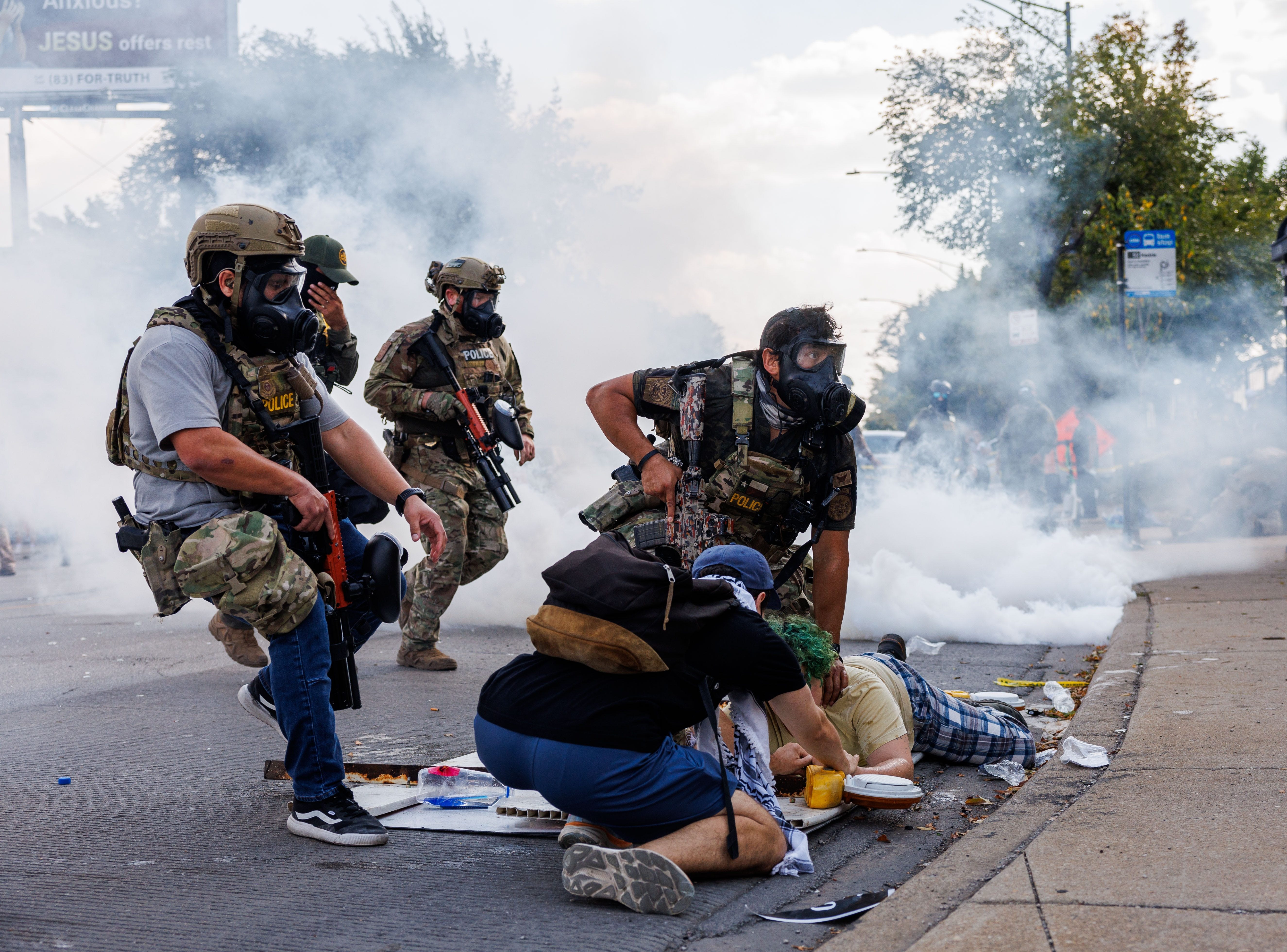
We find ourselves today in very fraught times, with unarmed citizens demonstrating in the streets against an apparent (to them) overreach of government. Masked, and armed members of newly formed and illegal agents of government have been sent by a Republican president to specifically Democrat cities and states. Their stated purpose is to hunt down and kidnap suspected illegal immigrants, failing to grant them the protections of legal representation.
You find no such actions in Republican held cities or states.
The citizenry ain’t having it. “Not in my city, you don’t.”
And they are on the streets, peacefully making their resistance known, many of them beaten, pepper-sprayed, handcuffed, arrested, and an increasing number killed for that resistance to unlawful force.
There are times for citizens to rebel against illegal authority, and these are such times.
There are also times for quiet reflection, and we are witnessing those as well. It’s hard to balance those emotions and circumstances, but that’s the business the founders set before us.
The least we can do is peacefully resist, remembering resistance is against the law only when those laws are just and in accordance with the spirit of freedom and care. Freedom for all, under the law, demands care and representation for the unlawfully abused.
Think about it, in the words and concerns of the founders.
Pay attention to the old ghosts stirring, the Spirits of Despotocracy.
And don’t turn away.