
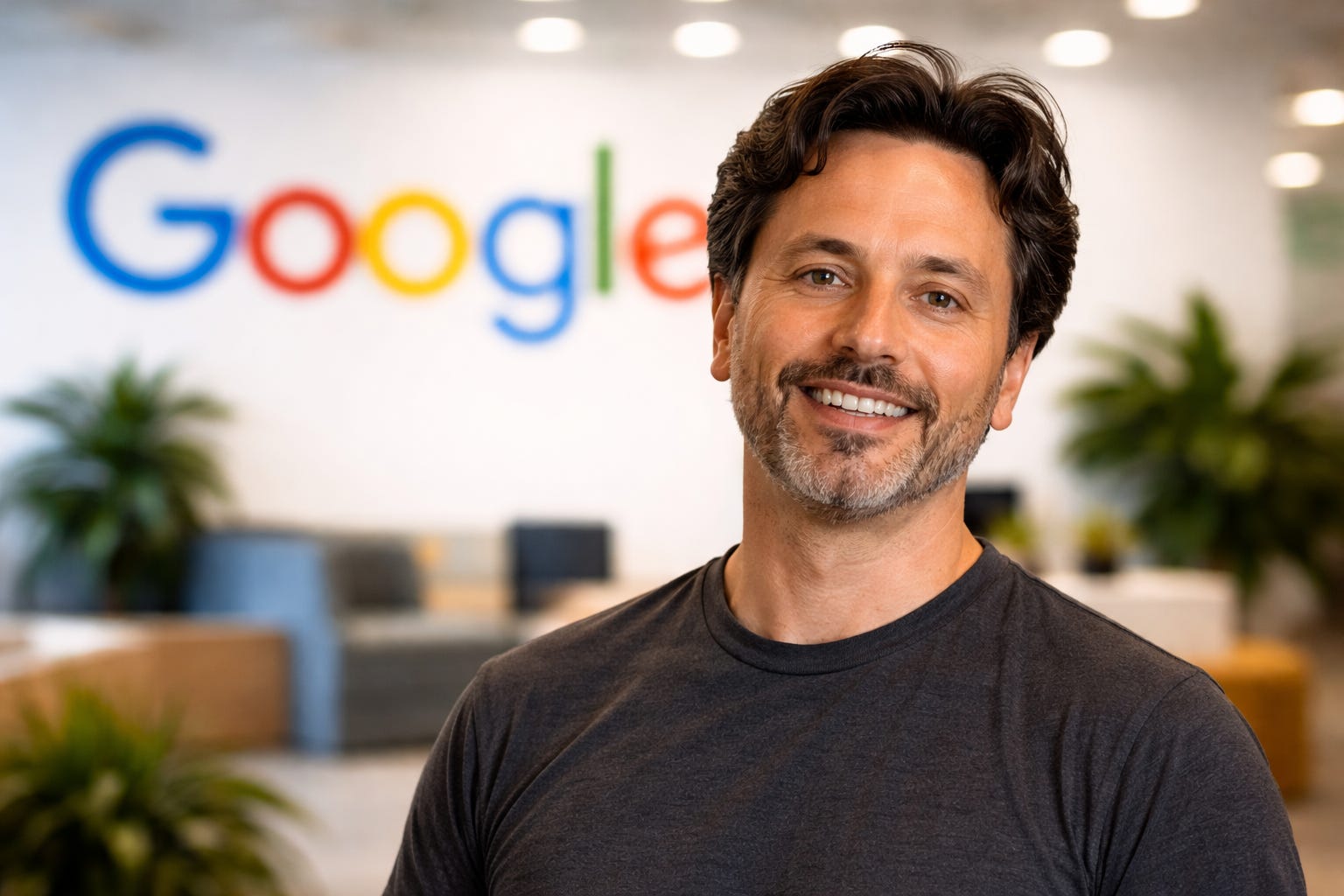
According (in part, to an article in the Guardian UK) Sergey Brin donated $25m to a Super Pac dedicated to blocking the California billionaire tax on top of $20m he had already given.
Sergey is said to be worth some two hundred thirty-six thousand million dollars, so the 45 mil is pocket change. But the intent is not to pay a damn dime.
If I remember correctly, it was the stated promise of Google (the firm he co-founded) to “Don’t be Evil,” but apparently failing to pay your fair share isn’t in the mix, although we can argue about ‘fair share.’ Some things erode more slowly than others and, at Google, historic codes of conduct are among them.
Yeah well, history we all know is written by the winners, that’s what makes it so fragile.
(According to Wikipedia) The motto was first suggested either by Google employee Paul Buchheit at a meeting about corporate values, that took place either in early 2000 or 2001 or, (according to another account), by Google engineer Amit Patel in 1999.
See what I mean about history? Either this, or that.
Buchheit, the creator of Gmail, said he “wanted something that, once you put it in there, would be hard to take out“, adding that the slogan was “also a bit of a jab at a lot of the other companies, especially our competitors, who at the time, in our opinion, were kind of exploiting the users to some extent.”
Words to live by, that will raise their heads later.
Certainly Sergey wouldn’t want to exploit anything, unless it was paying taxes.
What possible obligation could he have to the nation that made him a gazillionaire?
What, pay actual money?
My actual money?
Have you lost your mind?
Personally, I have always been a bit of a Google fan.
After all, they gave us a pretty good search tool and Gmail, at no fee. Their little mapping vehicle used to crawl around Prague (where I live) and now we have free street maps. Cool. Also, I have Google GPS for driving around Europe, and don’t pay for that either.
What’s not to like?
(Wikipedia “Criticisms”) “The algorithms that generate search results and recommend videos on YouTube have been criticized for being designed to maximize user engagement by reinforcing users’ pre-existing beliefs while also suggesting more extreme and less reliable content. Along with algorithms used on social media platforms, these algorithms have received substantial criticism as a driver of political polarization, Internet addiction disorder, and the promotion of misinformation, disinformation, violence, and other externalities.
“When Google’s parent company Alphabet announced in September 2025 that it would reinstate YouTube creators that were banned for spreading misinformation about COVID-19 and the 2020 U.S. presidential election, it was criticized for prioritizing “free expression” over “facts” and placed within the context of the company’s shift dating back to 2023. Aviv Ovadya argues that these algorithms incentivize the creation of divisive content in addition to promoting existing divisive content. Sally Hubbard argues that the monopoly‑like position of sites such as YouTube and Google Search contributes to the spread of fake news, whereas more competition in the market could make it harder to promote harmful content by just gaming one algorithm.
In 2025, Google ended its pledge not to use AI for weapons and surveillance.”
Oops…and double oops.
I gotta hunch there may be more. But I’m already sucking in my breath.
(Antitrust) “From the 2000s onward, Google and parent company Alphabet Inc. have faced antitrust scrutiny over alleged anti-competitive conduct in violation of competition law in several jurisdictions. Antitrust scrutiny of Google has primarily centered on the company’s dominance in the search engine and digital advertising markets.
“The company has also been accused of leveraging control of the Android operating system to illegally curb competition. Google has also received antitrust scrutiny over its control of the Google Play store and alleged “self-preferencing” at the expense of third-party developers. Additionally, Google’s alleged discrimination against rivals’ advertisements on YouTube has been subject to antitrust litigation. More recently, Google Maps and the Google Automotive Services (GAS) package have become the target of antitrust scrutiny.”
(European Union…where I live) “The European Commission has pursued several competition law cases against Google, namely: Complaint that Google abused its position as a dominant search engine to favor its own services over those of competitors. In particular, Google operated a free comparison shopping website, Froogle, which it abandoned in favor of a paid-placement-only site called Google Shopping.
“Other comparison sites complained of a precipitous drop in web traffic due to changes in the Google search algorithm, and some were driven out of business. The investigation began in 2010 and concluded in July 2017, with a €2.42 billion fine against the parent company Alphabet, and an order to change its practices within 90 days.
“A complaint, opened in 2015, that the dominance of the Android operating system was abused to make it difficult for competing third-party apps and search engines to be pre-installed on mobile phones. A further complaint, opened in 2016, that Google abused its market dominance to prevent competing advertising companies to sell ads to websites already using Google AdSense.
“In June 2023, the European Union (EU) accused Google of abusing its control of the EU market for buying and selling online advertising to undercut rivals.”
Okay, but mistakes are bound to be made. You can’t make applesauce, etc.
(Android) “On April 20, 2016, the European Union filed a formal antitrust complaint alleging that Google used its leverage over Android device vendors to require the mandatory bundling of its proprietary software, which hindered the ability of competing search providers to be integrated into Android and that barring vendors from producing devices running forks of Android both constituted anti-competitive practices. In June 2018, the European Commission determined a $5 billion fine for Google regarding the April 2016 complaints.”
Brin is not alone among Google’s top brass in upping his financial stake in the campaign against the ballot proposal.
The company’s former CEO Eric Schmidt donated $1.02m, adding to a previous $2m contribution. So, whatta we got, $347 million by the two founders?
The tech titans are battling the California Billionaire Tax act, often referred to simply as the billionaire tax. It’s a proposed ballot measure that would require any California resident worth more than $1bn to pay a one-off, 5% tax on their assets to help cover education, food assistance and healthcare programs in the state. It’s sponsored by the Service Employees International Union-United Healthcare Workers West, and is still in the signature-gathering phase.
Schmidt declined to comment. Brin didn’t immediately return a request for comment.
But they’d have to pry Google GPS from my cold, dead hands behind the wheel.
Thanks for that, you scoundrels.
Now, pay your fair share.
What a long way we have all come from those innocent days when Google first arrived on our screens. I demurred at first, happy with Alta Vista, only to be convinced by a particularly smart student who gave a fantastic presentation on exactly how Google ranking worked. That was in around 2000. But the algorithm that can plumb the depths of the human soul has yet to be invented. Here we all lie in darkness, flicking from page to page, while the tech bros grow fat on our stupor. Don't be ethical.