
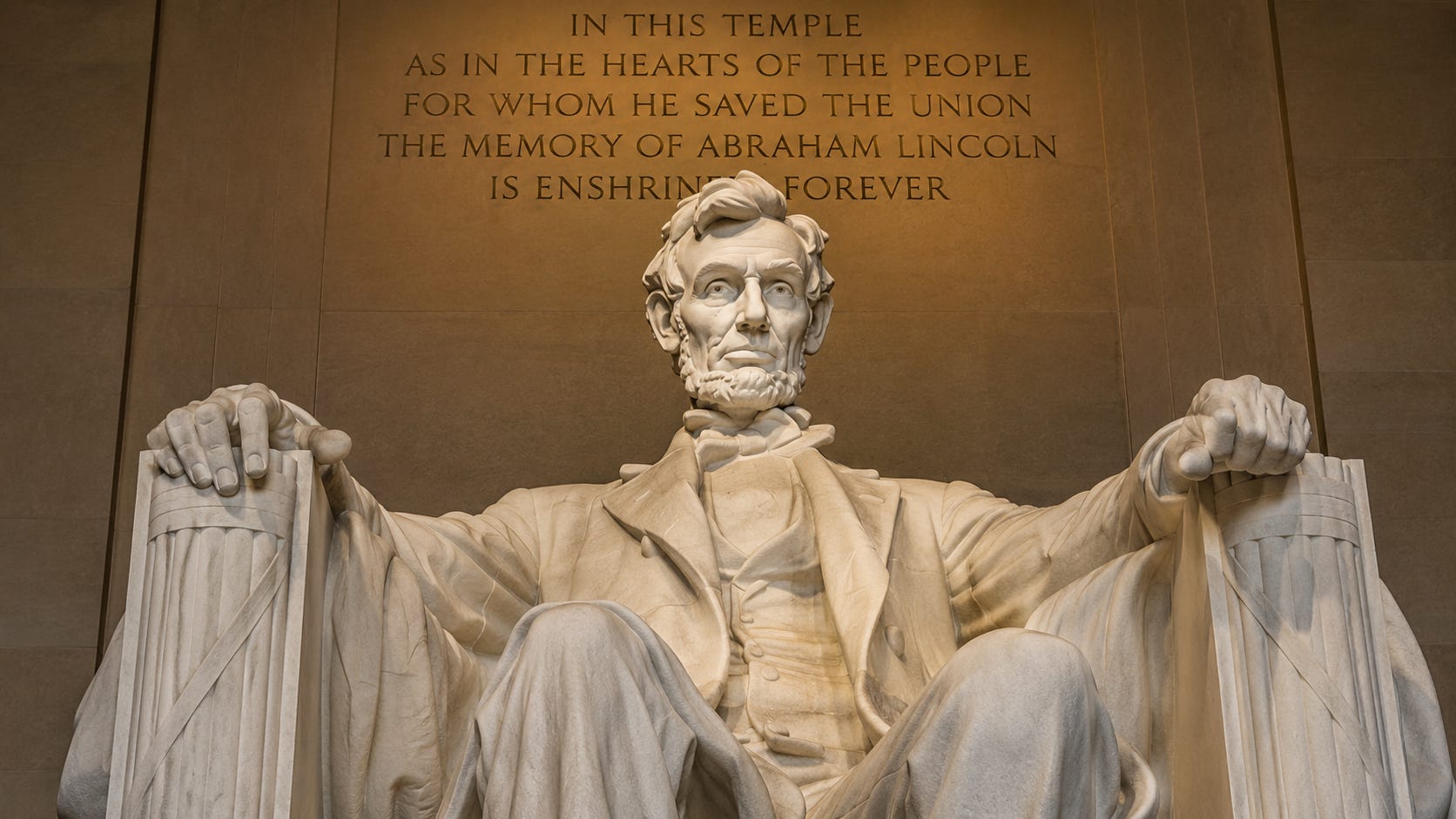
Those were the words of President Lincoln 168 years ago and are as prescient today as they were just prior to the Civil War.
He went on to say, “We have enough objects of charity at home, and it is our duty to take care of our own poor, and our own suffering, before we go abroad to intermeddle with other people’s business.”
Intermeddling in other foreign nation’s affairs marks the beginnings of colonial empire, and our post-World War Two intentions have never been so evident as they are today.
Colonialism is one, among the many, ‘isms’ that despots invented to defeat and control civil liberties.
So, lest we jump too quickly into causes and effects, it might be worthwhile to move a hundred years forward, from Lincoln’s Civil War to Roosevelt’s World War.
America’s late entry into that World War was fashioned in part by a national unwillingness to become involved again, having so recently struggled to recover from a 1918 World War, while also entangled in the midst of the 1929 stock-market crash.
Yet, another less understood factor, was President Roosevelt’s personal determination to hold off, until it was certain that Britain would lose its colonial empire.
Whether he was philosophically against colonialism, or simply eager to replace Britain’s with America’s, is less clear.
But history is shaped by ‘unintended consequences’ and war is is their birthmother.
Lend Lease, a program of shipping war materials to England, was America’s mechanical answer to ‘supporting without declaring.’ Even so, the Japanese surprise attack on Pearl Harbor sealed the deal on our reentry, as it was quickly followed by Germany’s declaration of war against America.
And there you go, with Johnny obligated to save Europe once more and come marching home again.
All of which is the historic background of civil abuse, and our subject is Lincoln’s determination to save America from such consequences from “even one hundred defeats.”
Comparisons of Trump to Hitler are (probably) a bit over the top, but as Mark Twain reminds us, ‘history may not repeat, but it often rhymes.’
In that sense,
Cultivation of a leader-centered movement rhymes, as well as
Persistent claims that established institutions are corrupt, while
Framing opponents as existential threats rather than legitimate competitors,
Encouraging supporters to distrust independent sources of information, and claiming
National decline, followed by a promise of national rebirth, with
Appeals rooted in grievance and resentment, as well as
expansion of executive authority as necessary to solve national problems.
All of which are common denominators.
Yet we’re lacking certain elements that distinguish what we hope is a stronger democratic republic, from a German government that was more historically vulnerable to dictatorship.
Hitler pounded lecterns, and screamed into microphones, forcefully demonstrating where public opinion can be led, when banners and searchlights are artfully provided. And he stood before a nation that had been both shamed and economically destroyed by an outrageously punitive 1918 Armistice.
While Trump has been accused by many critics of employing some of the same political techniques, his MAGA gatherings are pretty mild tea in comparison.
We’re not quite there yet, but economic inequality and needless wars have us dangerously close. Pay attention to those unintended consequences. They ultimately bring the mighty to their knees.
Yeah,our sitting president uses personal loyalties, grievances, attacks on institutions, fist-shaking against opponents, and illegal concentrations of executive power. But, although he’s done that with a blatant disregard for constitutional limits that try to damp down those actions, the similarities remain.
The differences are greatest in the scale of state power he has access to, and (at least thus far) the resulting social consequences.
We might well ask ourselves how many defeats of our civil liberties have we suffered so far, on our way to Lincoln’s hundred?
PS: I’ve been to the Lincoln Memorial three times, and it still makes me weep to walk into that space…