
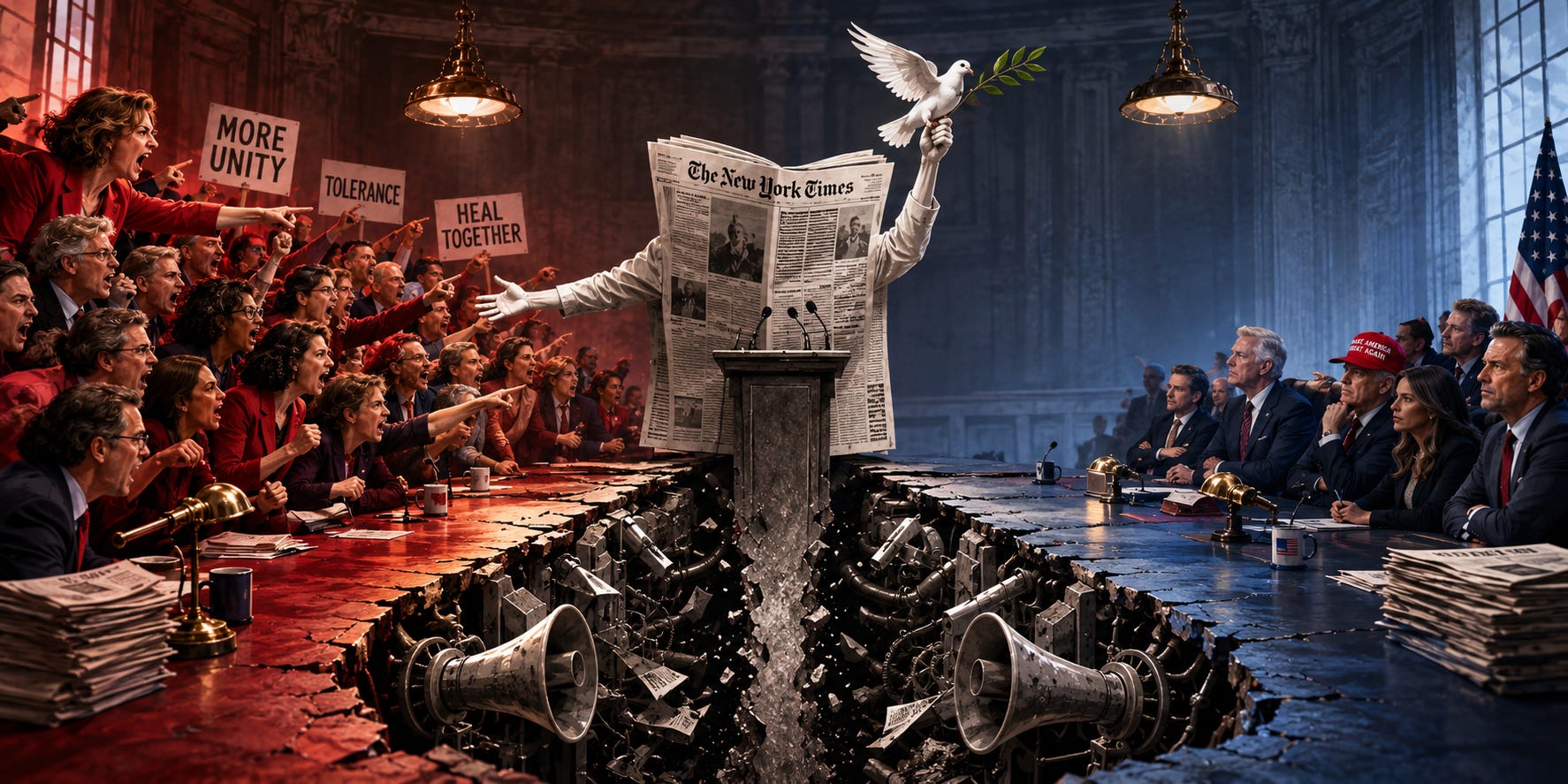
There are certain bedrocks of history that I have depended upon in my long life, and a middle-of-the-road NYTimes was one of them. Conservatives complained it was too liberal and liberals had a fit about its obviously conservative positions, which suited me admirably.
An occasionally burnt or underdone piece of toast proves the toaster is working.
No longer can I count upon that truth.
One of the really disturbing aspects of reaching my nineties, is the aspect of watching the world around me degrade, in hunks both large and small.
Automobiles that, in my youth, seemed both beautiful and identifiable, now resemble half-used bars of soap, their provenance known only by squinting at their badge,
Banks that once recognized me with a smile, now regularly go bust and ask me to save them,
Likewise, fast-fashion has abandoned the fabrics I once knew would soften comfortably with age,
And cel-phone addiction has all but removed reading and conversation from common use.
I know, I know, most of my readers today will find those merely the rantings of an old man, with his best days behind him.
And yet I smile at the remembrance of my father buying all three copies of the Chicago papers every day, commenting that he read the Tribune for the right-wing, the Sun-Times for the left, and the Daily News for the truth.
The president of The First National Bank of Evanston lived a block and a half from our home, knew us by name when we walked in, and drove a Buick.
These days (and I know this is only a partial truth), few are aware any more of who the hell owns anything. Businesses, whose names were once proudly displayed on yesterday’s mastheads, are now subsidiaries, subordinate to a conglomerate of an international organization, whose board members are occasionally made up of competitors.
What they now have in common, is no human voice at the other end of a telephone ‘chat’ offering, and a directive to join a group of other poor souls on an internet helpline.
Except for L.L. Bean
God love ‘em, here I am, living in Europe these past 33 years and still wearing a pair of Bean hunting boots. It used to be that when (and if) the rubber bottoms wore through, they would replace them (and send them back to you) at no charge, preserving those well worn and soft uppers.
They no longer do that, but if you call the company in Freeport, Maine (no matter the time of day or night), your call will be answered by a knowledgeable and friendly Maine resident, usually a woman, eager to put your smallest wish to the test. No phone answering services with slight Indian accents and a canned response will do for L.L. They are among the last of a diminishing number of retailers who care enough to do their very best.
And yet the NYTimes continues to disparage any welcomed changes in a Democratic Party that abandoned its base, as divisive or, at the very least, polarizing.
Have we really come to that in our national political discourse?
Has the combination of a Trump presidency, billionaire ownership of Congress, inflamed internet radicalization, and family dinners turned combative, actually captured the press?
Jefferson claimed that, given the choice of “newspapers without government” over “government without newspapers,” he would unflinchingly prefer the former.
The newspapers of his day, limited as they may have been, reported the news…and trusted the public to form their own opinion. Nowadays, we trust neither our news sources or ourselves.
And that has been made clear in recent NYTimes articles without raising so much as a hair on the neck of the American public.
If that was our only problem, perhaps I could learn to live with it. Even as I typed those words, my better self cried out, “Nah, probably not.”
I have met Mr. Divisive, walking down the street, hand in hand, with Miss Polarizing, and I recognize them today. If memory serves, they were not among those affecting my youth, except very briefly in the late 1930s when the America First Committee (including Henry Ford and Charles Lindberg) lobbied against joining the war in Europe.
You may have missed that, but Hitler had his American supporters in those days. Japan finished them off at Pearl Harbor.
Nor were the Divisive and Polarizing couple in evidence just after the war, when the Marshall Plan rebuilt a devastated Europe, and the American government welcomed home its troops with university educations and deeply subsidized housing.
Those ‘socialistic’ responses were not popular (or even well remembered) during my business years of the fifties through seventies. Those were times when everyone who cared to do it could make a buck, the wealthy paid their taxes, and we had no national debt…
…I can name the exact moment in our history they disappeared.
Strutting down the street, smiling at the public, Ronald Reagan introduced the divisives to an America too innocent to recognize their polarizing divisions.
We should have checked their nametags, but the Reagan Convention met mostly behind closed doors and a guarded agenda.
Reagan took me in as well, a lifelong Republican who first voted for Eisenhower. I’m enbarrassed to say he got me in both terms. As a small businessman, I’d prospered during he decades just past, and didn’t yet see Division and Polarization slouching their way down his road, all dressed up to kill, as a golden future.
You will not remember, if you were not paying attention almost fifty years ago, but the ‘Great Communicator’ presided over numerous scandals, resulting in the investigation, indictment or conviction of over 138 administration officials, the largest number for any president of the United States.
I’m tempted to say ‘until now,’ but we’ll leave that for history to answer.
Somewhere along the line, we lost our connection to our founders, and the constitution they handed down to us.
Perhaps they had an idea that even those events lay far in our American future. Surely they knew that ‘all men are created equal’ was a promise more than a fact in a slaveholding nation. When Ben Franklin was asked what kind of government the Constitutional Convention had given us, he replied, “A republic, Madam, if you can keep it.”
So, there were clues.
Keeping it has been more fraught for ‘we, the people’ than expected, considering how casually and carelessly we spent much of our 250 year history until now. America staggered through a Civil War, a World War, a Great Depression, and another World War, without learning much.
We are a nation quick to judge, and slow (painfully slow) to learn.
In my mind, we have behaved like kids with permissive parents, doing drugs, sliding through education, and expecting it all to work out somehow, without much attention for what came before us, living in a comfortable vacuum.
Aristotle coined the phrase “nature abhors a vacuum.”
And he was most certainly right about nature.
But politics loves a vacuum.
That was proven many times over, hollowing out governments after governments of our nation. Post-Reagan, the United States Government dropped its trousers in surrender, and greedily submitted to the siren calls of the wealthy class.
Clad in the golden clothing of ‘trickle-down economics’ and ‘international trade,’ we destroyed our union movements, shipped our industrial base off to China, and willingly destroyed our middle class in a trade for cheap goods, opting for bread and circuses in the garb of McDonalds and Netflix.
America’s economic strength responded by trickling down the legs of working America, out across the floor anddirectly into the bank accounts of an entirely new class; America’s billionaires.
Millionaires built America, and I helped them do it, in my working years.
Billionaires sold it off to line their pockets, creating the ‘best government money can buy,’ and I stood by and watched while they did it.
Remember, Donald Trump is not the cause.
He is the result of a vacuum in politics.
His supporters are what’s left of a destroyed industrial behemoth that money burned down, and to argue otherwise is both divisive and polarizing.