
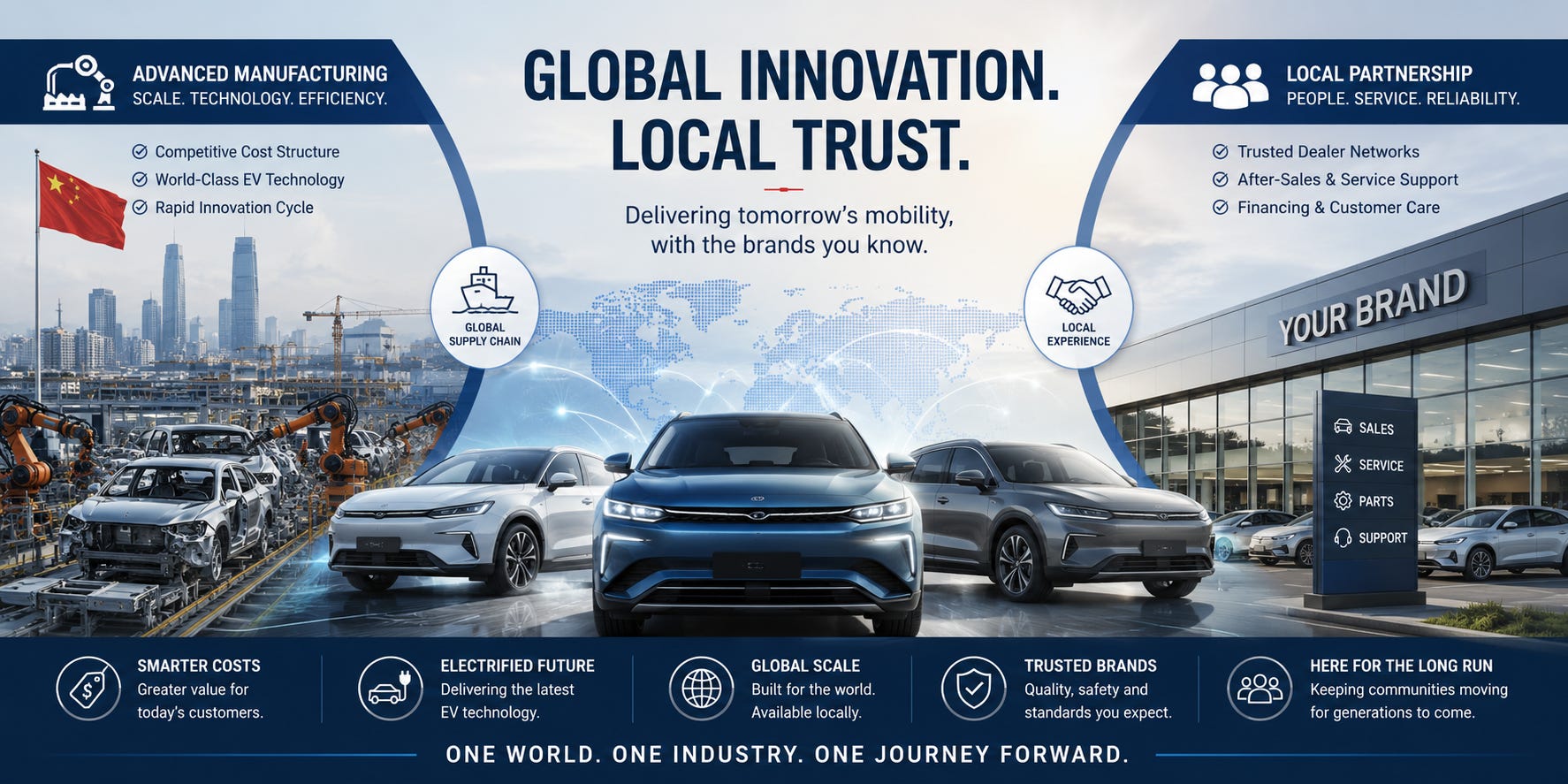
Chinese electric cars have been frozen out of the American market, although BYD, a major Chinese manufacturer, remains one of the largest installed fleets of electric buses in America. That’s mostly because it hit the market early and assembled buses at its Lancaster, California plant.
It’s now become common knowledge that electric vehicles are way cheaper to run, and that benefit can only increase as we install a larger and more convenient charging network. I hope that will happen within existing gas stations, because they are everywhere and charging fees will soften the blow of less petrol and Diesel customers.
Whattaya bet we’re too dumb and self-serving to do that?
But I’m reminded that the first Japanese passenger cars arrived in the United States in 1957, and commercial sales began in 1958. I was 22 years old at the time, working summers at home from university as a Ford salesman, and the talk around the dealership was that the Japanese cars were junk and would never compete.
Yeah, I guess.
They also said a punk college kid on the sales floor was a joke, and I was top salesman all three months, so go figure.
In 2025, the six major Japanese manufacturers—Toyota, Honda, Nissan, Subaru, Mazda, and Mitsubishi, sold over six million vehicles in the United States, which works out to approximately 37% of the market. But how they got there (Toyota is now the world’s largest carmaker) is largely due to the fact that Toyota, Honda, Nissan, Subaru, and Mazda manufacture millions of vehicles in American factories.
Japanese automakers went from pretty much zero market share in 1957, to 10% by the mid-1970s, 20% by the early 1980s, and more than a third of the American market today.
And what does that say about the future of Chinese electric cars and trucks?
It pretty much proves that early moves to keep our national brands alive is fraught with problems:
Chinese automakers are already vastly larger industrially than Japan’s were when they began entering the U.S. market. It’s only tariffs and legal barriers currently keeping them out.
Cost advantage. Engineers who tore down a BYD Seal estimated it had a roughly 25% cost advantage over comparable European and North American EVs and about a 15% advantage over Tesla’s China-made Model 3.
In markets where BYD competes directly without U.S.-style tariffs, its cars are generally cheaper than comparable Japanese and Korean electric cars.
Exact numbers in Europe vary significantly by country and incentives, but a rough comparison lists the Hyundai Kona Electric at roughly €40,000–€47,000 depending on market, while the comparable BYD Dolphin Surf ranges from about €27,000 to €31,000 before local discounts and incentives.
With those trends in place, methinks Chinese vehicles are as unstoppable in the US as Japanese cars were a half-century ago.
Which finally addresses my prediction concerning Ford and General Motors (Chrysler is already dead in its tracks over at Stellantis).
The backstory is that Chrysler tried to save itself every which way, even failing when bought by Mercedes. American brands are simply too expensive to build under American wage rates.
Certain models of Mercedes, Volkswagen, BMW, Mini, Volvo, Renault, Citroen, and Peugeot, all of which are historically European brands, now have substantial Chinese ownership or manufacturing.
It’s time (or perhaps long past time) for the Ford and GM brands to follow suit.
Keep the brands, and the designs, we’re pretty good at that, at least in the American market. So keep the badging and, most importantly, the dealership networks.
Dealers would be delighted to survive within a 10% profit margin, when comparing that to going out of business.
And, going out of business is the alternative.
Japan was the preview, and going out of business is the main attraction in this coming movie.
So says the onetime Ford Salesman of the Month…