
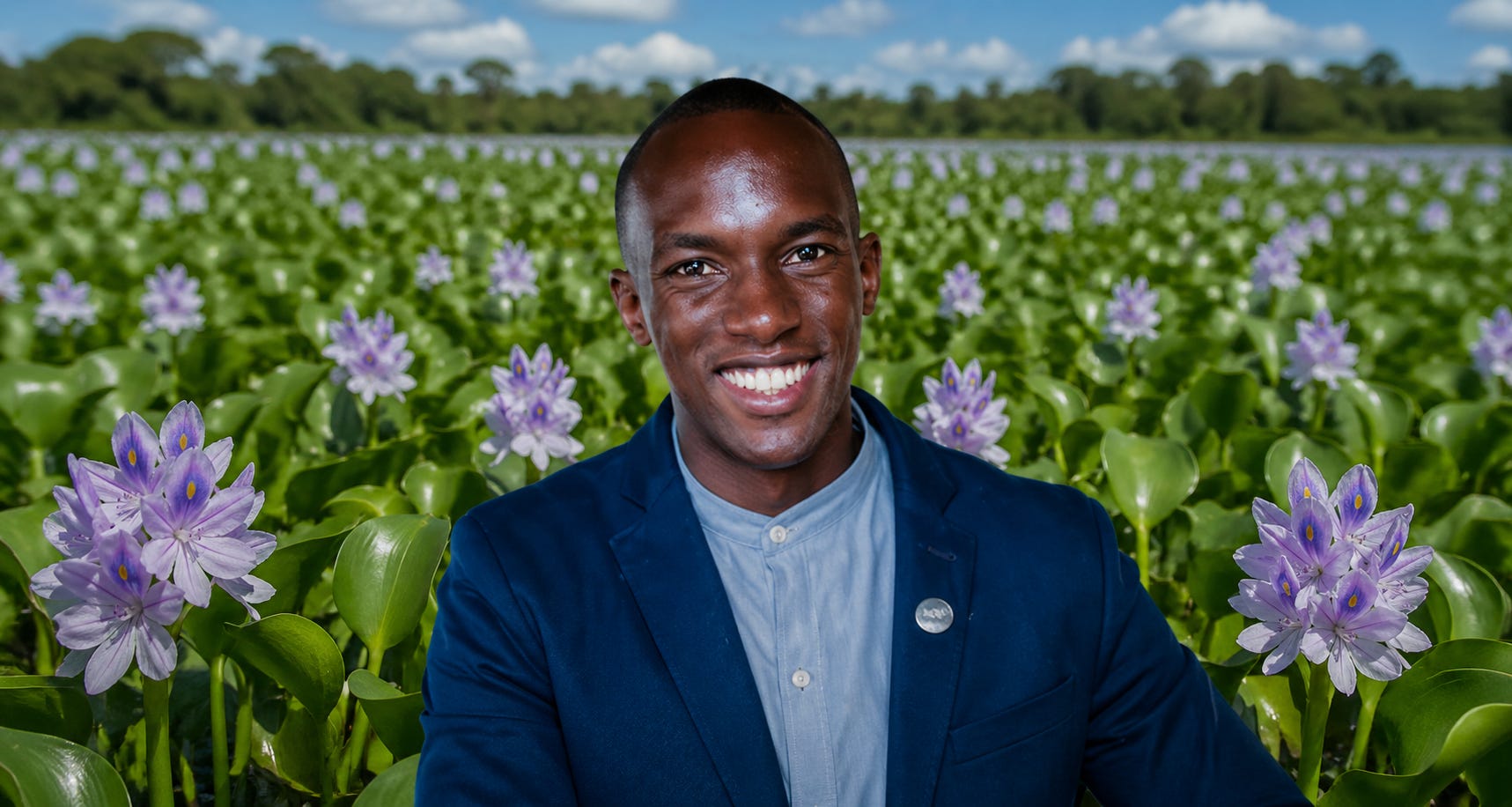
Meet Joseph Nguthiru, an award-winning Kenyan environmental engineer. In these times of wars and power struggles, you’re going to love this story.
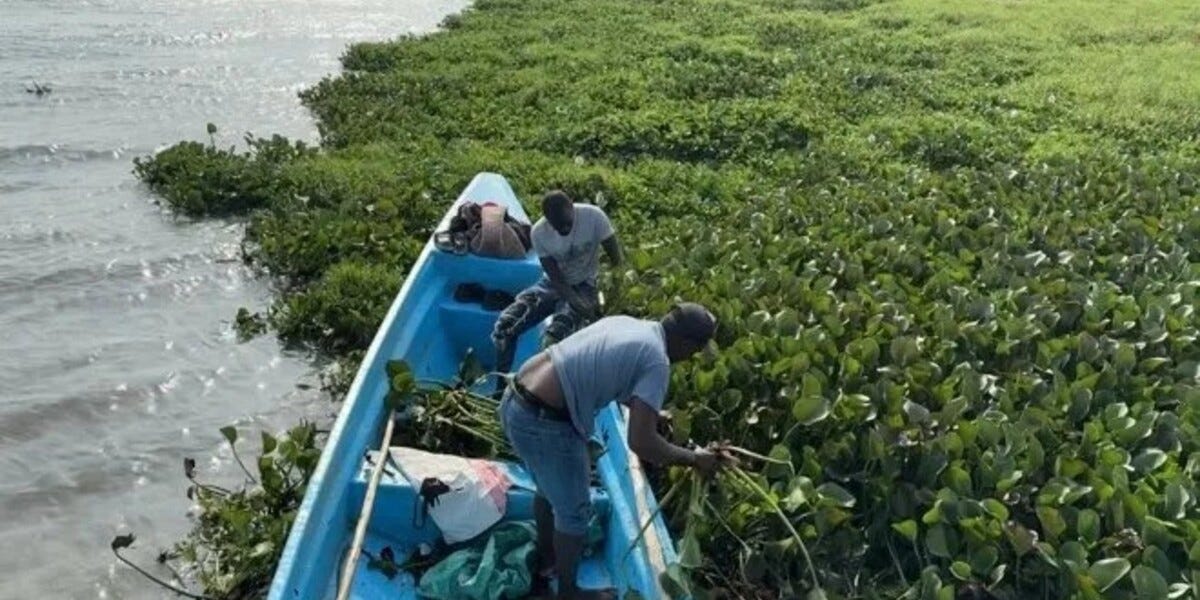
(Africa Global News) A natural problem solver, the problem became personal for Joseph when he and his classmates spent hours trapped in water hyacinth during a field trip.. Beautiful, but invasive, it’s a fast-growing aquatic plant originally from South America that now blankets large sections of water bodies from Lake Victoria in East Africa to river systems in West Africa. It chokes ecosystems, disrupts transport, and threatens local economies.
That moment pushed him to look beyond removal and toward transformation, because that’s what his education as an environmental engineer taught him to do—look at problems from an economic point of view.
So, he did what any smart young guy would do and formed a company.
Let me introduce HyaPak Ecotech, a company built around converting an invasive pain in the neck into biodegradable plastic. Rather than treating the weed as waste, HyaPak treats it as raw material, turning an environmental burden into a functional product that replaces single-use plastics.
The model, according to the article, maximizes a local value chain. Communities, as well as individuals, harvest the hyacinth from affected areas, dry it, and channel it into a HyaPak processing system, where it is broken down, combined with natural binders, and formed into biodegradable products. Rather than another cost-based impediment in an already poor country, everyone involved makes a buck.
That’s what engineers do, and scientists aren’t trained to do.
The company’s early focus was on seedling bags, which hold enough water to kick start the plant, then decompose in soil and release nutrients, supporting agriculture rather than polluting it
The impact of Joe Nguthiru’s HyaPak already attracted international attention, signed partnerships, and started exporting products to markets in the United States and Germany, placing water hyacinth biodegradable plastic within the global conversation on sustainable materials.
It’s scalable.
While the billionaire tech bros concentrate of using up available water and electric resources, and polluting what’s left of an already fragile environment…for profit, because that’s what tech bros do…a super bright young Kenyan engineer is investing in solutions.
I knew you’d like this bit of light in an increasingly dark world.
Sleep well.
Invest a couple of bucks in HyaPak.