
The billionaire class has such a grip on all forms of media, that there is no available oxygen for debate. With the most sophisticated tools ever available for this purpose, humanity has sunk to tripartite levels of rock throwing, common to our earlier caveman lives. All that’s left to us is a choice between over-liberal, righteous right, and apathetically confused.
I would suggest that Apathetically Confused is ahead by several lengths, as media in all its forms reaches the final furlong and heads down the homestretch.
What were the odds?
Any keen judge of horseflesh would have known that, since the starting gun, Over Liberal and Righteous Right were destined to finish dead last…out of breath, sweating and all tuckered out.
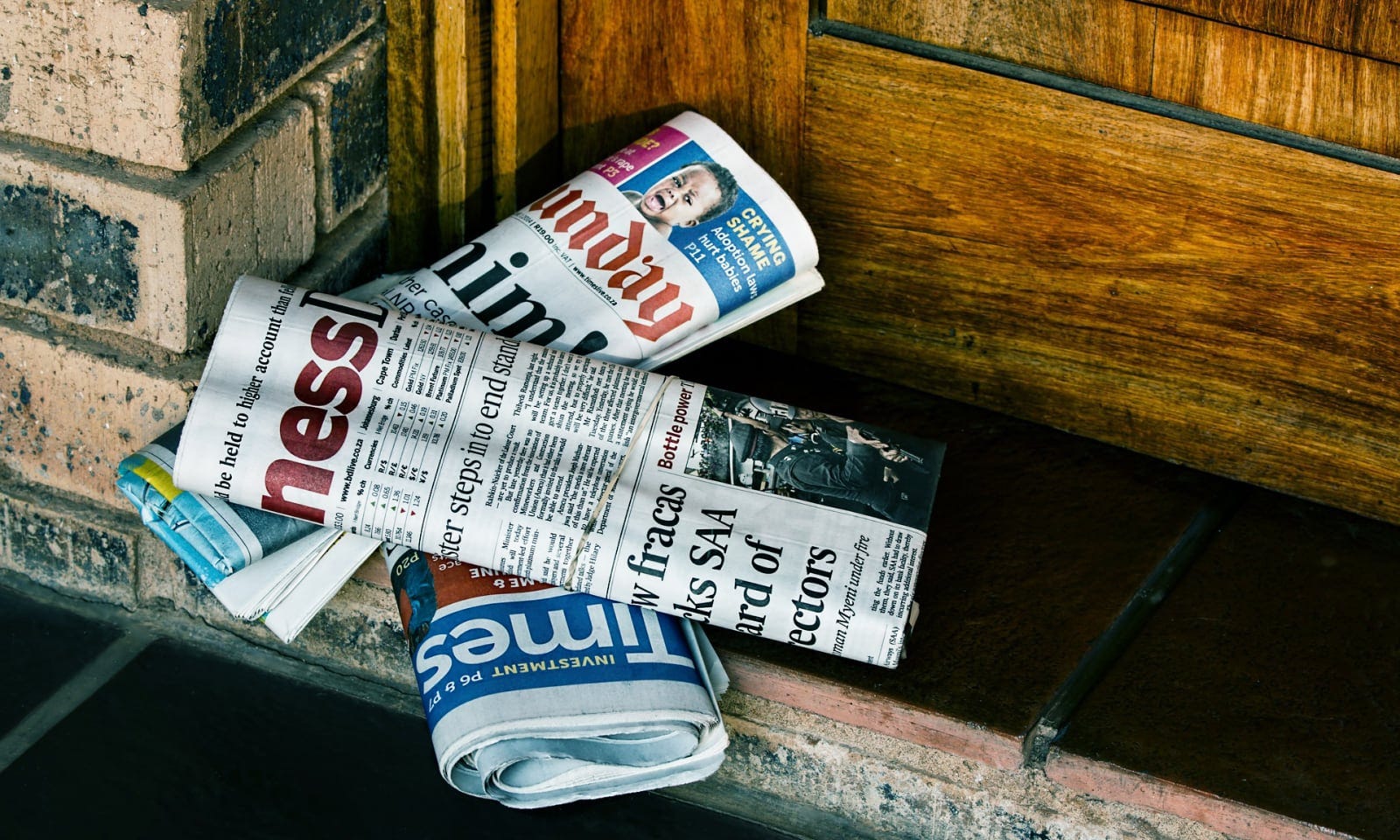
There’s a story connected to that (as you might have expected), but I must reach way back to the 1940s to tell it. My father was an avid reader of newspapers, and he and mom would climb in the car every evening about eight, to drive up to the Wilmette train station when the freshly printed Chicago papers would arrive. My father would read all three. He used to joke that he read the Chicago Tribune for the Republican side, the Sun Times for the Democrats, and the Daily News for the truth.
It wasn’t all that much of a joke.
In today’s internet media we seem to think that FOX News and MSNBC provide enough balance, but this time the joke is on us.
In my dad’s time, we all knew that Colonel McCormick (Tribune) and Randolph Hearst (the largest syndicate of its day) were wealthy men. Hearst Castle in California was, and is today, a sight to see and Hearst is satirized in the Orson Welles movie Citizen Kane. Money counted in those days, as it does today, but millionaires were a thousand times less rich than billionaires.
A widely cited historical study of 500 metropolitan newspapers (covering the big-city markets that made up the vast majority of circulation) reports that in 1950, family-owned newspapers accounted for 88% of the number of metropolitan newspapers and 91% of metropolitan circulation.
The Bezos family was not among them, Jeff not having been born until 1964.
So, we were safe for a while.
But even then, the game was changing. In 1950, American newspapers were still predominantly locally owned and published. The image of an owner-publisher sweating over an outdated press, fighting costs and hiring kids to ‘wrap and deliver’ was not inaccurate. The country had roughly 1,770 daily papers, most controlled by individual publishers or families who lived in the communities they served.
Even among metropolitan dailies—those with the largest audiences—nearly nine in ten titles were family-owned, and more than nine in ten readers received their news from such papers. Chains existed, but they were typically small, newspaper-only (Hearst and McCormick style) operations, and ownership implied political as well as profit motivation.
Today that structure has been inverted.
Fewer than 1,200 daily newspapers remain, and roughly 70 percent are owned by the largest twenty-five chains, many controlled by hedge funds or private-equity-style investors. Editorial decisions are centralized, staffing is relentlessly cut, and newspapers are no longer civic institutions, but financial and concentrated political instruments.
What has disappeared in this inversion of control is not nostalgia, but accountability.
And, accountability-wise, money is king. The current presidency keeps feeding these billionaires tax breaks, at the expense of both runaway national debt, and expanded tax load on an already overburdened working public. It’s certainly no surprise that front-row seats at the recent inauguration were all occupied by the richest men in America.
They paid for those seats by favors yet to come.
A problem with the nation’s second most honored newspaper, Donald?
400 staffers fired overnight. Not cooks and bottle-washers, American and international journalists, those harried and invaluable witnesses to truth on the ground, in the air, and leaping tall buildings. Supermen and women, but a pain in the ass of lies, fraud and illegalities.
Lies, fraud and illegalities are a problem these days, folks, in case you hadn’t noticed.
But never fear, your patrons are here, Mr. president. Late-night entertainment a problem for you these days, Mr. T?
Colbert will be gone in May, about the time of my 91st birthday. Jimmy Kimmel proved too high a mountain to scale so quickly after Colbert, but the axe is being sharpened. I have a hunch both men will be far more of a problem on the outside than the inside, but that’s just a hunch.
Larry Ellison just rode into town on a maybe not-too-white horse, and put his kid David securely in the saddle over at Paramount Global. Co-founder of Oracle, and ranked among the wealthiest individuals globally, he’d completed an acquisition of Paramount Global in a deal valued at about $8.4 billion. Only loose change for Larry, that merger created a new corporate entity called Paramount Skydance Corporation.
Maybe this is too long a way around to what’s happening at 60 Minutes, but sometimes we need ‘Previews to Coming Attractions.’
For those youngsters in my audience, that’s what used to come on between movies, when people actually went to movie theaters.
Anyway, as these deals ultimately play out, 60 Minutes is owned by CBS News, and CBS News is owned by Paramount, Skydance, so the younger Ellison effectively became the owner of the corporate entity that controls 60 Minutes once the merger closed. Since Bari Weiss took over, CBS News is a shambles, The Executive Producer of 60 Minutes has left, and Anderson Cooper has hung up his saddle after 20 years as well.
And, if you’re confused about Who’s on First, you must remember Abbot and Costello, which is…oh, never mind.
Where is an honest patron when you need one?
Historically, when politics or social circumstances failed to sustain public needs, societies turned to patronage, not charity, but support. For centuries, writers, artists, scientists, and publishers survived not by scale or consolidation, but through sustained backing from individuals who valued their contributions. Patronage did not dictate content; it underwrote freedom of judgment. The Medici patronage kept Michaelangelo in groceries and a renaissance was born.
The purchase by today’s special interests recreated the very conditions patronage once addressed, but in their own narrow self interest. Media (and a whole lot of other stuff) now struggles, not because there’s no audience, but because right-wing politics and billionaire priorities value extraction over support. In this warped and self-interested sense, patronage is no longer a consideration.
I cheered Bezos when he stuck $250 million into the Washington Post and guaranteed to leave it alone. I thought the Post had found a patron. But when the current American president took over, the whole world suddenly had a price on its head. Bezos gave in to (readily available) tax preference, and a seat at the table of power, no matter how corrupt, for business advantage.
Wow, I mistakenly thought a couple hundred billion might be enough.
I was wrong.
I have been wrong before, and survived. Honest patronage restores a missing relationship between the work, the worker, and a supporter who understands that some forms of truth-telling cannot survive on quarterly returns alone. Patronage doesn’t replace markets, it repairs what markets have broken.
There will be no renaissance in the aftermath of Bezos and Musk.
They do not repair. They seem to take financial advantage from destruction.
But destruction, like war, is never worth the cost.